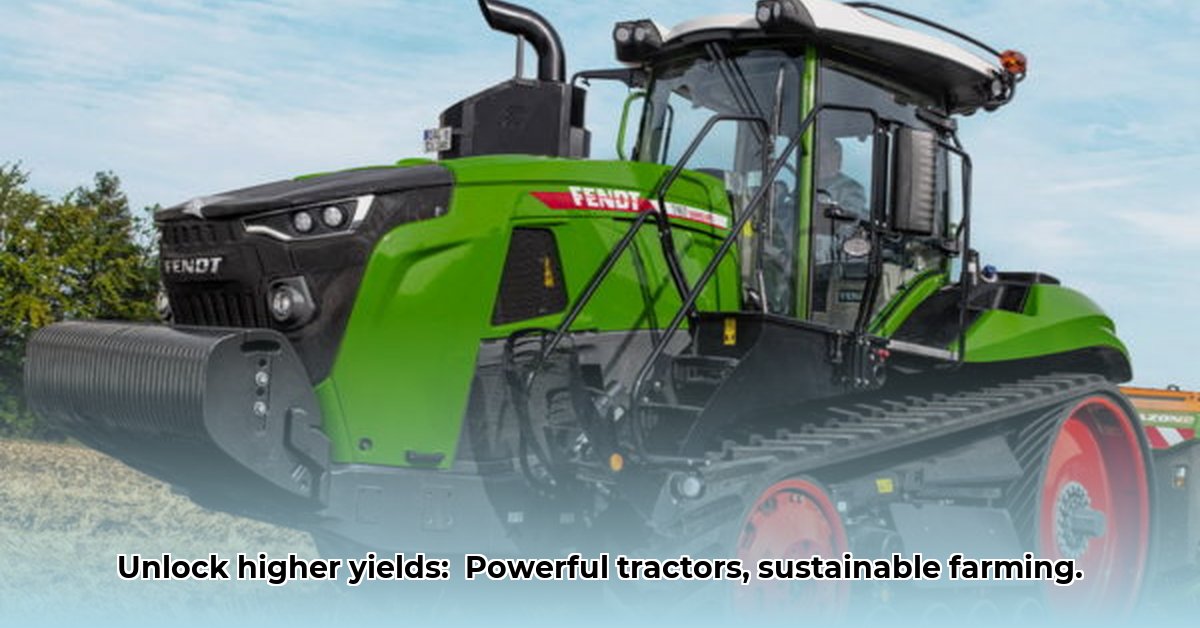
Highest Horsepower Tractors: A Powerful Tool for Sustainable Farming?
The agricultural landscape is rapidly evolving, with farmers increasingly relying on high-horsepower tractors to enhance efficiency and maximize yields. These powerful machines, however, present a complex interplay of increased productivity, environmental impact, and the pursuit of long-term sustainability. This article explores this crucial intersection, examining the benefits and drawbacks of high-horsepower tractors within the context of responsible farming practices. For more information on tractor horsepower, check out this helpful resource: powerful tractor data.
Key Insights:
- High-horsepower tractors significantly increase efficiency but demand careful consideration of soil compaction and fuel consumption.
- Precision agriculture technologies are crucial for mitigating the negative environmental consequences of powerful machinery.
- A holistic approach, encompassing pilot programs, efficient fuel management, and sustainable tillage practices, is key to successful implementation.
The Heavy Hitters: A Look at Top Tractor Models
Giants like the Case IH Steiger/Quadtrac and John Deere 9RX series lead the charge in high-horsepower tractor technology. Their advanced designs promise improved fuel efficiency compared to older models. However, a lack of readily available, independent comparative testing data hinders informed purchasing decisions. Can advertised fuel savings truly offset the substantial investment and ongoing maintenance? This critical question underscores the need for more transparent data from the manufacturers. Further independent verification is necessary to ensure the stated fuel economies are accurate under real-world farming conditions.
More Power, More Problems? The Sustainability Question
While high-horsepower tractors offer the potential for faster cultivation and reduced labor costs, the environmental consequences must be thoroughly examined. Soil compaction, a major concern, diminishes water infiltration, restricts root growth, and negatively impacts long-term yields. “The increased pressure from heavy machinery can significantly reduce soil porosity and air space," explains Dr. Emily Carter, Soil Scientist at the University of California, Davis. This raises the crucial question: Do the short-term gains outweigh the potential for long-term soil degradation?
A Farmer's Perspective: Weighing the Pros and Cons
Farmer John, a progressive farmer from Iowa, exemplifies the complexities farmers face. Attracted by the efficiency of a high-horsepower tractor, he cautiously implemented a pilot program. By meticulously tracking fuel usage, comparing it to his older model, and including maintenance and depreciation, he concluded that while efficiency improvements existed, a broader, holistic approach was vital for genuine sustainability. This showcases the importance of meticulous data collection and real-world evaluation before committing to large-scale adoption. His experience highlights the practical challenges and the necessity of case-specific evaluations.
Precision Farming: A Powerful Ally in Sustainable Agriculture
Precision agriculture technology, including GPS-guided tractors and variable-rate application systems, offers a powerful solution to mitigate the negative impacts. These technologies optimize resource use (fertilizer, pesticides), minimizing waste and environmental harm. “By combining high-horsepower tractors with VRT, farmers can strategically apply inputs only where needed, thereby reducing environmental impact and improving resource efficiency," notes Mr. David Miller, Agricultural Engineer at Purdue University. However, the initial investment and training requirements should be carefully considered.
Building a Sustainable Future: A Multi-Faceted Approach
Sustainable integration demands a strategic approach:
Pilot Programs: Initiate small-scale trials to evaluate effectiveness before large-scale adoption. This minimizes risk and allows for adjustments based on real-world performance.
Precision Agriculture Integration: Combine high-horsepower machinery with precision agriculture technologies for optimized resource use and reduced environmental impact. This synergy is key to achieving both efficiency and sustainability.
Prioritize Fuel Efficiency: Choose tractors with superior fuel efficiency to reduce operational costs and environmental impact. Fuel efficiency should be a key selection criterion, as it directly impacts both the economic and environmental bottom line.
Long-Term Soil Health: Implement practices to minimize soil compaction and maintain long-term soil fertility. The long-term health of the soil is paramount for sustainable agriculture, and should not be overlooked.
How to Mitigate Soil Compaction from High-Horsepower Tractors
Soil compaction, a significant drawback of heavy machinery, reduces water infiltration and root growth. Mitigation strategies are crucial for long-term soil health:
Understanding Soil Compaction
Soil compaction is akin to squeezing a sponge, reducing its ability to hold and release air and water, essential for thriving plant roots. The weight of high-horsepower tractors, particularly on wet soil, significantly exacerbates this issue.
Diagnosing the Problem
Regular soil testing, using tools like penetrometers to measure soil resistance, provides crucial insights into compaction levels. This allows farmers to objectively assess soil health and tailor mitigation strategies.
Implementing Solutions
A multi-pronged approach is essential:
Tire Technology: Wider tires and specialized tires (VF and IF) distribute weight more effectively, reducing pressure on the soil.
Precision Agriculture: GPS guidance minimizes redundant passes, while Variable Rate Technology (VRT) optimizes input application based on real-time soil conditions.
Sustainable Tillage Practices: No-till and reduced tillage methods minimize soil disturbance.
Crop Rotation: Rotating crops helps improve soil structure over time.
Long-Term Management
Sustainable soil management requires ongoing monitoring, adaptation, and a commitment to implementing effective mitigation strategies. The long-term health of the soil is directly linked to the profitability and sustainability of the farm over many years.
Pros and Cons of High-Horsepower Tractors
| Feature | Pros | Cons |
|---|---|---|
| Increased Efficiency | Faster field operations, reduced labor costs, larger acreage coverage. | Higher purchase and maintenance costs, potential for increased compaction. |
| Fuel Efficiency (Potential) | Newer models may offer improved fuel economy. | High fuel consumption if not managed efficiently. |
| Reduced Labor Costs | Fewer workers required. | Higher initial investment. |
| Greater Productivity | Cultivate larger areas in less time. | Potential for environmental damage if not managed sustainably. |
The Future is Now: A Balanced View
High-horsepower tractors offer significant productivity gains, but sustainable integration demands a balanced approach. Environmental stewardship, economic viability, and technological advancement must align for a truly sustainable agricultural future. The path forward requires continuous adaptation, informed decision-making, and a commitment to responsible farming practices.